CEIMIC Facilitates Waste Management with the GLOBALG.AP RMS Platform

CEIMIC Facilitates Waste Management with the GLOBALG.AP RMS Platform

CEIMIC Facilitates Residue Management with the GLOBALG.A.P. RMS Platform

Transparency in the agricultural supply chain reaches a new digital standard. With the arrival of GLOBALG.A.P. Version 6, the Residue Monitoring System (RMS) will be mandatory for the use of the GGN label.

About the RMS System and the GGN Label

In an ongoing effort to promote food safety and market integrity, GLOBALG.A.P. has developed the Residue Monitoring System (RMS). This innovative digital platform is designed to simplify the management, tracking, and reporting of residue tests in agricultural products. Starting in the coming months, under the new Version 6 framework, using the RMS becomes a mandatory requirement for all producers wishing to label their products with the GGN label, ensuring full traceability for the end consumer.


Strategic Benefits of the RMS Platform:

  • Precise Monitoring and Reporting: Allows certified users to accurately report pesticide residue levels, ensuring each lot stays within permitted limits.
  • International Regulatory Compliance: Ensures alignment with Maximum Residue Limits (MRLs) established by global regulations and demanding markets.
  • Communication Efficiency: Facilitates agile data exchange with buyers and retailers, strengthening transparency in transactions.
  • Traceability and Trust: Promotes full visibility in the supply chain, increasing the perceived value of products with the GGN label.

CEIMIC’s Technological Advantage

At CEIMIC, we are deeply committed to the success of agricultural producers. We understand that data management can be complex; therefore, we have integrated our technological capabilities to allow the automatic uploading of information to the GLOBALG.A.P. RMS platform directly from our laboratories.

This integration eliminates the administrative burden for the producer, reduces the risk of manual errors, and ensures that food analysis reports are always up to date for regulatory compliance.

Optimize your residue management with our integrated solutions. For technical inquiries, contact us at: info@ceimic.com

CEIMIC. Life Sciences Testing Group. It’s about life.

Climate change: the importance of monitoring water quality

Climate change: the importance of monitoring water quality

Climate Change: The Critical Importance of Water Quality Monitoring

Access to clean and safe water is vital for life, ecosystems, and sustainable development. Discover how continuous monitoring serves as the most effective tool to protect public health against the challenges of extreme weather.

Drinking water is not just a basic resource; it is the fundamental pillar for human health and the engine of global development. However, water pollution remains one of the most significant challenges of our time, a problem drastically worsened by the effects of climate change. In this scenario, constant monitoring is not an option but an indispensable responsible management tool for environmental balance and sanitary security.

The Impact of Extreme Weather Events

Alterations in climate patterns are alarmingely modifying the availability and purity of water resources:

  • Floods: Sudden increases in water flow carry sludge, sewage, and industrial/agricultural chemical waste (such as pesticides and fertilizers) into water sources, facilitating the spread of dangerous pathogens.
  • Droughts: Reduced water levels diminish the natural dilution capacity of water bodies. This leads to a dangerous concentration of pollutants and heavy metals, sometimes forcing populations to rely on low-quality sources.
  • Storms: Intense rainfall causes accelerated surface runoff, loading rivers, lakes, and reservoirs with sediments and contaminants that alter biological balance and drastically increase turbidity.

Monitoring as a Strategic Tool

Water quality monitoring is a comprehensive scientific process that encompasses systematic collection, laboratory analysis, and precise data interpretation. This data provides the necessary technical basis to identify pollution sources, assess public health risks, ensure compliance with current legal standards, and develop long-term water resource management strategies.

Critical Technical Evaluation Parameters:

  • Physical Parameters: Temperature, color, turbidity, and odor, which serve as immediate sensory indicators of possible alteration.
  • Chemical Parameters: pH, dissolved oxygen, heavy metals (Lead, Mercury, Arsenic), nutrients (Nitrogen and Phosphorus), pesticides, and complex industrial residues.
  • Biological Parameters: Presence of pathogenic microorganisms (bacteria, viruses, and protozoa) according to WHO international guidelines.

Benefits of Continuous Monitoring and CEIMIC’s Role

The importance of effective monitoring has never been more evident. This practice allows for the early identification of contaminants, preventing disease outbreaks and protecting the biodiversity of aquatic ecosystems. CEIMIC offers integrated solutions ranging from accredited sampling to high-precision analysis. Using cutting-edge technologies, we help organizations make informed decisions to minimize impacts on health and the environment.

Together, we can ensure that future generations have access to clean and safe water. For technical inquiries or analysis requests, contact us at: info@ceimic.com

CEIMIC. Life Sciences Testing Group. It’s about life.

How to Improve Transparency and Food Safety

How to Improve Transparency and Food Safety

Traceability: The Pillar of Transparency and Safety in Fruit Exports

In a globalized market, knowing where our food comes from is not a luxury—it is a requirement. Discover how traceability systems and CEIMIC analysis ensure compliance with international safety standards.

Food traceability is much more than a logistical record; it is the guarantee that every stage of the supply chain is visible and auditable. For the export industry, according to the Food and Agriculture Organization of the United Nations (FAO), implementing robust systems is essential to strengthen confidence in international markets.

Key Requirements for a Transparent Chain

  • Origin Identification: Detailed records of the producer and the exact geographic location of the crop.
  • Supply Chain Mapping: A comprehensive history of all intermediaries and collection centers.
  • Treatment History: Total transparency regarding pesticides, fungicides, and preservation processes.

CEIMIC’s Strategic Role: MRL Verification

Traceability is only as real as the data that supports it. At CEIMIC, we act as the scientific verification link in this chain.

Through our advanced analysis, we validate that each lot strictly complies with the Maximum Residue Limits (MRLs) required by regulations such as those from the European Food Safety Authority (EFSA) or the U.S. Food and Drug Administration (FDA).

Implementing robust traceability does not just comply with the law; it positions your company as a benchmark for quality and transparency in the global market.

CEIMIC. Life Sciences Testing Group. It’s about life.
Contamination of water and food today: a challenge for public health

Contamination of water and food today: a challenge for public health

Water and Food Contamination During Floods: A Critical Public Health Challenge

Floods do not only cause structural damage; they leave an “invisible threat” in water and basic supplies. Discover the microbiological and chemical risks after the waters recede.

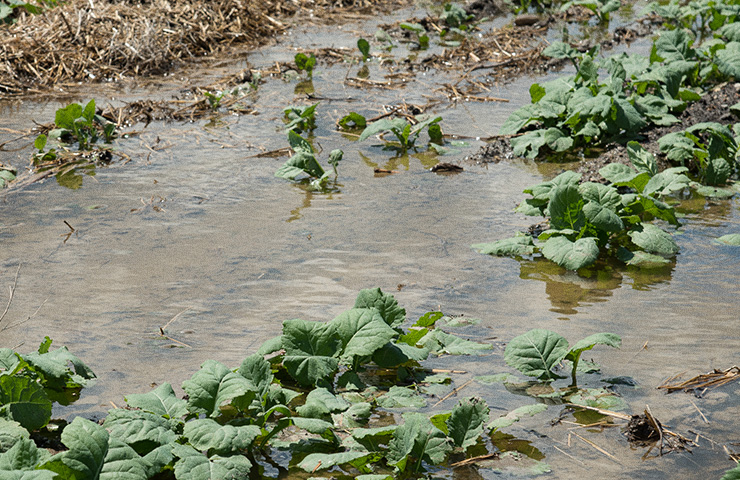
Floods are natural disasters that deeply impact communities. Beyond the immediate destruction, the greatest challenge for public health arises as the waters recede: the massive contamination of water sources and food supplies. This phenomenon, closely monitored by organizations such as the Pan American Health Organization (PAHO), facilitates the proliferation of pathogenic microorganisms and the dispersion of dangerous contaminants.

Where is the danger?

Floodwater acts as a transport vehicle for a wide range of harmful substances, spreading them across residential, agricultural, and industrial areas. According to PAHO, identifying the origin of these contaminants is the first step toward a safe community recovery.

Main Contaminating Agents:

  • Pathogenic Microorganisms: Bacteria such as Escherichia coli, Salmonella, and Vibrio cholerae (the cause of Cholera), as well as viruses like Hepatitis A.
  • Chemical Contaminants: Water runoff releases pesticides and fertilizers that can seep into underground aquifers.
  • Heavy Metals: Mobilization of lead, mercury, and cadmium from industrial zones or waste deposits—substances that can cause permanent neurological damage.

Impact on Health and Vulnerable Groups

Ingesting contaminated water or food after a flood frequently leads to outbreaks of gastroenteritis, leptospirosis, and other waterborne diseases. The World Health Organization (WHO) warns that children, the elderly, and immunocompromised individuals are the most exposed to serious complications.

Prevention and Mitigation Strategies

To minimize the impact, it is essential to implement a response plan based on four pillars recommended by WHO and local authorities:

  1. Basic Sanitation: Strengthen sewage infrastructure and waste disposal.
  2. Source Protection: Sealing wells and using advanced filtration systems to prevent the entry of contaminated surface water.
  3. Community Education: Informing the population about mandatory water disinfection and the disposal of food that has come into contact with floodwater.
  4. Immediate Actions: Rapid response through the distribution of safe water and emergency vaccination campaigns.

The Critical Role of Laboratory Analysis

In disaster scenarios, the visual perception of water is no guarantee of safety. Technical analysis is the only reliable tool to declare an area or supply as “safe.”

At CEIMIC, as leaders in life sciences analysis, we offer comprehensive solutions for crisis management, including urgent microbiological analysis and screening for complex chemical contaminants.

CEIMIC is committed to protecting public health in critical moments. Through detailed analysis and immediate technical response, we ensure that your community or industry regains safety after the emergency.

CEIMIC. Life Sciences Testing Group. It’s about life.

+ For more information on emergency protocols, visit the official website of the World Health Organization (WHO).

European Union Multi-Annual Coordinated Control Plan: Guaranteeing Food Safety

European Union Multi-Annual Coordinated Control Plan: Guaranteeing Food Safety

The Multi-Annual National Control Plan: Ensuring Food Safety in the European Union

Exporting food to the European market requires compliance with rigorous standards. Discover how Regulation (EU) 2017/625 and multi-annual controls ensure that products are safe for the final consumer.

About the MANCP

Food safety is the central pillar of the European Union’s health policy. To materialize this commitment, the Multi-Annual National Control Plan (MANCP) stands as the master surveillance tool. Under Article 109 of Regulation (EU) 2017/625, all Member States are obliged to implement control programs that include systematic sampling and exhaustive analysis to verify that every product complies with contaminant and pesticide limits.

Types of Sampling in the Coordinated Control

  • Regular Sampling: Periodic and scheduled monitoring of food products, especially fruits and vegetables, to detect pesticide residues and ensure continuous safety tracking.
  • Risk-Based Sampling: Additional controls activated based on identified risks, allowing for a swift response to potential threats detected in systems like RASFF.
  • Analysis in Accredited Laboratories: All samples are processed under strict quality regulations and advanced methodologies to ensure results with full technical and legal validity.

Food Safety Analysis Pillars:

  • Pesticide Residues: Strict verification of compliance with Maximum Residue Limits (MRLs).
  • Microbiological Analysis: Early detection of pathogens to prevent foodborne illness outbreaks.
  • Chemical Contaminants: Identification of heavy metals, my mycotoxins, and other adverse substances.
  • Food Additives: Validation of safety thresholds for preservatives and colorants.

CEIMIC’s Commitment

At CEIMIC, we actively support these initiatives by providing our technical expertise and high-complexity laboratories so that exporters and producers meet these excellence standards. Our priority is scientific precision at the service of life, ensuring that every analysis contributes to maintaining trust in the global market.

Together, we ensure safe food for the world. For technical inquiries or analysis requests, contact us at: info@ceimic.com

CEIMIC. Life Sciences Testing Group. It’s about life.