
The importance of laboratories in sustainability certifications

The importance of laboratories in sustainability certifications

The Importance of Laboratories in Sustainability Certifications

Understand how analytical laboratories help companies achieve sustainability certifications by ensuring compliance and promoting responsible practices.

In recent years, the demand for more sustainable business practices has grown exponentially. Certifications such as ESG (Environmental, Social, and Governance), B Corp Certificate, and ISO 14001 have become essential for companies looking to meet customer expectations while minimizing environmental impacts.

In this scenario, specialized laboratories play a key role by providing the necessary analysis for companies to achieve and maintain these certifications. In today’s article, we will discuss each of them and how CEIMIC can help your company with these certifications.

Why are sustainability certifications important?

Sustainability certifications are not just a seal of approval; they represent a company’s commitment to responsible and ethical practices:

  • ESG: this certification evaluates environmental, social, and governance performance. It is essential for investors looking for businesses committed to sustainability.
  • B Corp Certificate: companies holding this certificate demonstrate rigorous standards of social and environmental performance, public transparency, and legal accountability.
  • ISO 14001: this international certification sets criteria for an effective environmental management system, helping companies improve their environmental performance.

The Essential Role of Analytical Laboratories

Specialized laboratories like CEIMIC play a vital role in the certification process. They perform a variety of analyses and tests that ensure companies meet the standards required by these certifications.

1. Environmental Analysis for ISO 14001

For ISO 14001 certification, companies must demonstrate a clear commitment to environmental management, involving regular analysis of air, water, and soil quality. Environmental analysis laboratories conduct tests on pollutant emissions, industrial waste monitoring, and environmental impact assessments.

2. Assessments for ESG Certification

The ESG certification process requires companies to be transparent and accountable in their environmental and social practices. Competent laboratories can perform environmental analysis, compliance testing, and technical evaluations that help organizations identify areas for improvement.

3. B Corp Certificate Compliance

Companies seeking the B Corp Certificate must demonstrate a strong commitment to positive impact. Laboratories provide accurate data for environmental performance assessment, including product life cycle analysis and carbon footprinting.

Benefits of working with Certified Laboratories:

Partnering with laboratories that hold recognized accreditations, such as ISO 17025, ensures that analyses are accurate and reliable:

  • Reliable results: testing that follows rigorous and globally accepted standards.
  • Continuous improvement: identifying areas to optimize operations.
  • Risk reduction: regulatory compliance to avoid fines and reputational damage.

The journey toward sustainability begins now with CEIMIC

CEIMIC can be your company’s strategic partner in this process, providing reliable data for decision-making needed to achieve and maintain these important quality seals.

For technical support, contact us at: info@ceimic.com

CEIMIC. Life Sciences Testing Group. It’s about life.

Commitment to Quality and the Environment: Celebrating World Environment Day at CEIMIC automatic

Commitment to Quality and the Environment: Celebrating World Environment Day at CEIMIC automatic

Commitment to Quality and the Planet: Celebrating World Environment Day at CEIMIC


On June 5th, CEIMIC reaffirms its commitment to protecting the planet by adhering to the highest standards in environmental analysis. Our laboratory, accredited under ISO/IEC 17025, guarantees accurate and impartial results, which are essential for technical trust and the international acceptance of data.

This accreditation ensures efficient operations through rigorous requirements in processes, resources, and management. At CEIMIC, we maintain an optimal work environment with highly qualified staff and state-of-the-art technology to provide reliable results that help preserve ecosystems for future generations.

On this World Environment Day, we invite everyone to reflect on the importance of quality in environmental analysis and to join our mission of protecting and preserving our planet for future generations.

For more details about our practices and accreditations, we invite you to follow us on LinkedIn.

CEIMIC. Life Sciences Testing Group. It’s about life.
How to Know if a Food Analysis Laboratory is Ideal for Your Company?

How to Know if a Food Analysis Laboratory is Ideal for Your Company?

Does your laboratory hold ISO 17025 accreditation and the support of agencies like SENASA, DIGESA, or ICA?

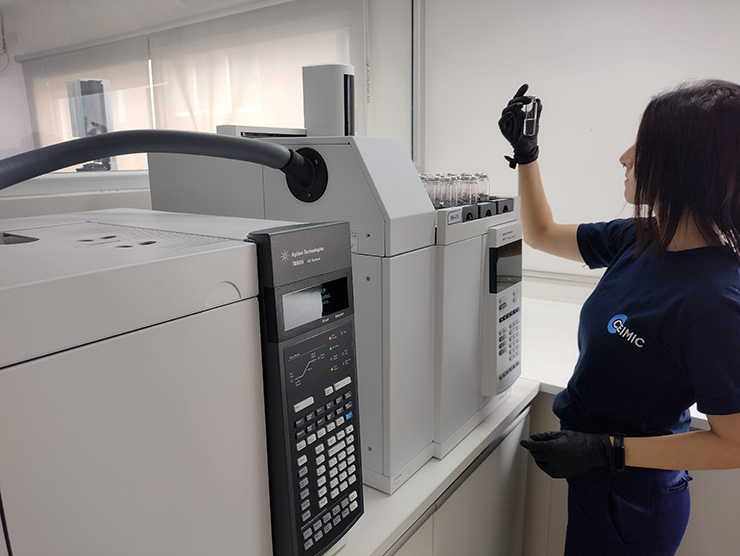
In the field of food safety, having analysis laboratories certified under  the ISO 17025 standard and authorized by government organizations such as SENASA, INEN,  DIGESA, SAG and ICA, among others, is crucial to guarantee the quality and safety of food  . that reach consumers’ tables. Learn the benefits of working with  high-class laboratories and how these certifications impact the food industry.


ISO 17025 and Food Safety: Key to Trust and Quality

In the food industry, the accuracy and reliability of laboratory analysis is critical to ensuring that products are safe for consumption. The ISO 17025 standard, which establishes the general requirements for the technical competence of testing and calibration laboratories, has become a global standard that guarantees the quality of the results obtained.

What is ISO 17025?

ISO 17025 is an international standard that specifies requirements for the technical competence of testing and calibration laboratories. This standard covers aspects such as quality management, documentation and technical processes, ensuring that laboratories not only meet quality standards, but are also able to consistently produce accurate and reliable results.

“ISO 17025 certification is a guarantee that a laboratory can consistently produce accurate and reliable results.”

Government Authorizations in Latin America

In addition to ISO 17025 certification, food analysis laboratories must be authorized by government agencies that regulate food safety in each country. Among the most prominent organizations are:

  • SENASA (Argentina): National Agri-Food Health and Quality Service, in charge of regulating and certifying processes related to food safety and animal and plant health.
  • INEN (Ecuador): Ecuadorian Institute of Standardization, which supervises the quality of food products and other consumer goods.
  • DIGESA (Peru): General Directorate of Environmental Health and Food Safety, which regulates environmental health and food safety.
  • SAG (Chile): Agricultural and Livestock Service, responsible for the protection and improvement of animal and plant health, and food safety.
  • ICA (Colombia): Colombian Agricultural Institute, in charge of agricultural health and the regulation of food quality in the country.

Benefits of Working with Certified Laboratories

  • Working with high-class laboratories and certifications such as ISO 17025 offers numerous benefits for both food companies and consumers. Some of these benefits include:
  • Reliable and Accurate Results: Certified laboratories ensure that analysis results are accurate and reliable, reducing the risk of errors and improving food safety.
  • Regulatory Compliance: Government certification and authorizations ensure that laboratories comply with all applicable regulations and standards, avoiding penalties and product recalls.
  • Improved Reputation: Partnering with certified laboratories improves the reputation of food companies, building trust among consumers and business partners.
  • Access to International Markets: International certifications such as ISO 17025 are recognized globally, facilitating access to international markets and compliance with export requirements.

“Working with certified laboratories improves the reputation of companies and generates trust among consumers.”

CEIMIC meets the highest quality standards in its food analysis. Our laboratory is accredited under the ISO 17025 standard and authorized by various government agencies, offering a wide range of services that include analysis of pesticides, metals, among others, complying with the highest quality standards in food analysis.

In conclusion, ISO 17025 certification and authorizations from government organizations such as SENASA, INEN, DIGESA, SAG and ICA are essential to guarantee the safety and quality of food. By choosing certified laboratories, companies can ensure that their products meet the highest safety standards, thus protecting the health of consumers and strengthening their position in the global market.

CEIMIC Life Sciences Group
It’s About Life


Latin American laboratories accredited by the FDA: Pillars of Product Safety and Quality in the US.

Latin American laboratories accredited by the FDA: Pillars of Product Safety and Quality in the US.

CEIMIC and its Commitment to FDA Standards in the Global Market

The U.S. Food and Drug Administration (FDA) recognizes the vital role of accredited laboratories abroad in ensuring the safety and quality of products destined for the U.S. market.

How does the work of FDA-accredited laboratories outside the U.S. affect consumer safety?

Foreign FDA-accredited laboratories play a crucial role by ensuring that imported products meet the same rigorous standards as domestically manufactured ones. They conduct exhaustive testing to detect potential risks and ensure regulatory compliance, significantly reducing the possibility of adulterated products in the market.

How do these laboratories contribute to international trade facilitation?

They provide a reliable infrastructure for evaluation and certification at the point of origin. This streamlines trade by ensuring regulatory compliance from the source, reducing customs inspection times and improving import process efficiency.

What is the role of these laboratories in global supply chain oversight?

They work closely with the FDA to identify public health risks, conducting audits at manufacturing and distribution facilities abroad. This proactive oversight is essential for maintaining the integrity of imported products.

CEIMIC and its laboratories in Latin America hold this accreditation, demonstrating an exceptional commitment to food safety and the promotion of global trade.

CEIMIC. Life Sciences Group. It’s about life.