Contamination of water and food today: a challenge for public health

Contamination of water and food today: a challenge for public health

Water and Food Contamination During Floods: A Critical Public Health Challenge

Floods do not only cause structural damage; they leave an “invisible threat” in water and basic supplies. Discover the microbiological and chemical risks after the waters recede.

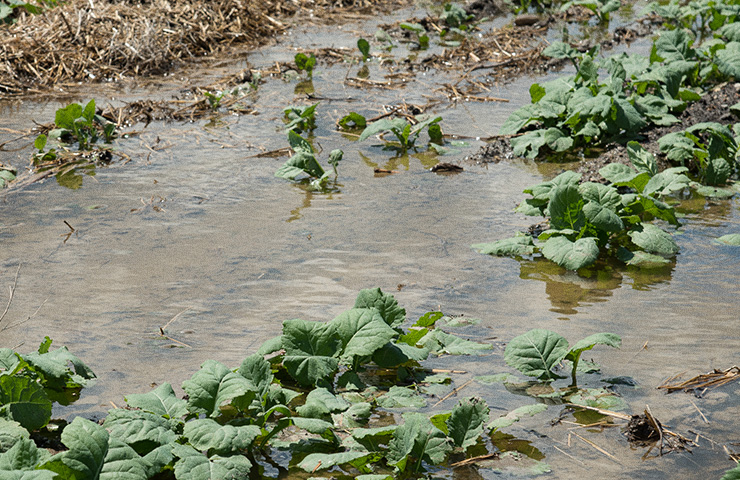
Floods are natural disasters that deeply impact communities. Beyond the immediate destruction, the greatest challenge for public health arises as the waters recede: the massive contamination of water sources and food supplies. This phenomenon, closely monitored by organizations such as the Pan American Health Organization (PAHO), facilitates the proliferation of pathogenic microorganisms and the dispersion of dangerous contaminants.

Where is the danger?

Floodwater acts as a transport vehicle for a wide range of harmful substances, spreading them across residential, agricultural, and industrial areas. According to PAHO, identifying the origin of these contaminants is the first step toward a safe community recovery.

Main Contaminating Agents:

  • Pathogenic Microorganisms: Bacteria such as Escherichia coli, Salmonella, and Vibrio cholerae (the cause of Cholera), as well as viruses like Hepatitis A.
  • Chemical Contaminants: Water runoff releases pesticides and fertilizers that can seep into underground aquifers.
  • Heavy Metals: Mobilization of lead, mercury, and cadmium from industrial zones or waste deposits—substances that can cause permanent neurological damage.

Impact on Health and Vulnerable Groups

Ingesting contaminated water or food after a flood frequently leads to outbreaks of gastroenteritis, leptospirosis, and other waterborne diseases. The World Health Organization (WHO) warns that children, the elderly, and immunocompromised individuals are the most exposed to serious complications.

Prevention and Mitigation Strategies

To minimize the impact, it is essential to implement a response plan based on four pillars recommended by WHO and local authorities:

  1. Basic Sanitation: Strengthen sewage infrastructure and waste disposal.
  2. Source Protection: Sealing wells and using advanced filtration systems to prevent the entry of contaminated surface water.
  3. Community Education: Informing the population about mandatory water disinfection and the disposal of food that has come into contact with floodwater.
  4. Immediate Actions: Rapid response through the distribution of safe water and emergency vaccination campaigns.

The Critical Role of Laboratory Analysis

In disaster scenarios, the visual perception of water is no guarantee of safety. Technical analysis is the only reliable tool to declare an area or supply as “safe.”

At CEIMIC, as leaders in life sciences analysis, we offer comprehensive solutions for crisis management, including urgent microbiological analysis and screening for complex chemical contaminants.

CEIMIC is committed to protecting public health in critical moments. Through detailed analysis and immediate technical response, we ensure that your community or industry regains safety after the emergency.

CEIMIC. Life Sciences Testing Group. It’s about life.

+ For more information on emergency protocols, visit the official website of the World Health Organization (WHO).

CONAMA’s new air quality standards: how the changes impact society

CONAMA’s new air quality standards: how the changes impact society

New National Environmental Council (CONAMA) Air Quality Standards: Impact on Health and Industry

For the first time in 30 years, Brazil establishes concrete deadlines to reach World Health Organization (WHO) air quality standards. Discover how the CONAMA resolution transforms monitoring requirements and what this means for the productive sector.

The National Environmental Council (CONAMA) has recently approved a historic update to air quality standards in Brazil. After three decades of debates, the country now has a clear roadmap to align its pollution levels with World Health Organization (WHO) guidelines, a fundamental milestone for public health and biodiversity balance.

The Link Between Air, Health, and Ecosystems

Air quality is not just an environmental indicator; it is a determining factor for human health. Atmospheric pollutants are responsible for a high incidence of respiratory and cardiovascular diseases, in addition to generating acid rain and processes that degrade fauna and flora. The new regulations from the National Environmental Council establish stricter concentration limits to ensure a safe environment for all.

Pillars of the New Resolution

In compliance with the WHO recommendations, key changes focus on three pillars:

  1. Rigorous Limit Reduction: Acceptable levels for critical pollutants such as particulate matter (PM10 and PM2.5), sulfur dioxide (SO2), nitrogen dioxide (NO2), and ozone (O3) have been adjusted downward.
  2. Compliance Timeline: For the first time, specific deadlines are set for states and municipalities to adapt their policies and infrastructure, allowing for a gradual but mandatory transition according to CONAMA guidelines.
  3. Transparency and Surveillance: Strict guidelines for continuous monitoring and public disclosure of data are implemented, increasing the accountability of authorities and industries involved.

Comparison: The Evolution of the Regulations

Aspect Before the Resolution With the New Resolution
Alignment Outdated regarding modern science. Aligned with WHO standards.
PM2.5 Limits Permissive, above recommended levels. Restrictive, focused on lung protection.
Monitoring Less rigorous with low public participation. Strengthened, with mandatory full transparency.
Deadlines Undefined or non-existent. Clear goals with compliance dates.

Impact on Society and the Economy

The adoption of these standards established by the World Health Organization generates a positive domino effect:

  • Public Health: Drastic reduction in hospitalizations due to respiratory conditions.
  • Biodiversity: Lower chemical impact on soil and water sources, protecting sensitive species.
  • Innovation: Driving the development of clean technologies and more efficient industrial processes.

CEIMIC’s Technical Support

The implementation of these new guidelines from the National Environmental Council requires high-precision analytical capacity. Compliance with the new CONAMA limits is not just a legal requirement, but a commitment to sustainability.

As leaders in laboratory services and environmental analysis, at CEIMIC we are prepared to support industries and organizations in this transition. We have cutting-edge technology for emission monitoring and pollutant analysis, ensuring that your operation complies with the most demanding standards of the new regulatory framework.

Together, we build a cleaner environment for future generations.

CEIMIC. Life Sciences Testing Group. It’s about life.

+ For more related content visit this link.

How to Know if a Food Analysis Laboratory is Ideal for Your Company?

How to Know if a Food Analysis Laboratory is Ideal for Your Company?

Does your laboratory hold ISO 17025 accreditation and the support of agencies like SENASA, DIGESA, or ICA?

In the field of food safety, having analysis laboratories certified under  the ISO 17025 standard and authorized by government organizations such as SENASA, INEN,  DIGESA, SAG and ICA, among others, is crucial to guarantee the quality and safety of food  . that reach consumers’ tables. Learn the benefits of working with  high-class laboratories and how these certifications impact the food industry.


ISO 17025 and Food Safety: Key to Trust and Quality

In the food industry, the accuracy and reliability of laboratory analysis is critical to ensuring that products are safe for consumption. The ISO 17025 standard, which establishes the general requirements for the technical competence of testing and calibration laboratories, has become a global standard that guarantees the quality of the results obtained.

What is ISO 17025?

ISO 17025 is an international standard that specifies requirements for the technical competence of testing and calibration laboratories. This standard covers aspects such as quality management, documentation and technical processes, ensuring that laboratories not only meet quality standards, but are also able to consistently produce accurate and reliable results.

“ISO 17025 certification is a guarantee that a laboratory can consistently produce accurate and reliable results.”

Government Authorizations in Latin America

In addition to ISO 17025 certification, food analysis laboratories must be authorized by government agencies that regulate food safety in each country. Among the most prominent organizations are:

  • SENASA (Argentina): National Agri-Food Health and Quality Service, in charge of regulating and certifying processes related to food safety and animal and plant health.
  • INEN (Ecuador): Ecuadorian Institute of Standardization, which supervises the quality of food products and other consumer goods.
  • DIGESA (Peru): General Directorate of Environmental Health and Food Safety, which regulates environmental health and food safety.
  • SAG (Chile): Agricultural and Livestock Service, responsible for the protection and improvement of animal and plant health, and food safety.
  • ICA (Colombia): Colombian Agricultural Institute, in charge of agricultural health and the regulation of food quality in the country.

Benefits of Working with Certified Laboratories

  • Working with high-class laboratories and certifications such as ISO 17025 offers numerous benefits for both food companies and consumers. Some of these benefits include:
  • Reliable and Accurate Results: Certified laboratories ensure that analysis results are accurate and reliable, reducing the risk of errors and improving food safety.
  • Regulatory Compliance: Government certification and authorizations ensure that laboratories comply with all applicable regulations and standards, avoiding penalties and product recalls.
  • Improved Reputation: Partnering with certified laboratories improves the reputation of food companies, building trust among consumers and business partners.
  • Access to International Markets: International certifications such as ISO 17025 are recognized globally, facilitating access to international markets and compliance with export requirements.

“Working with certified laboratories improves the reputation of companies and generates trust among consumers.”

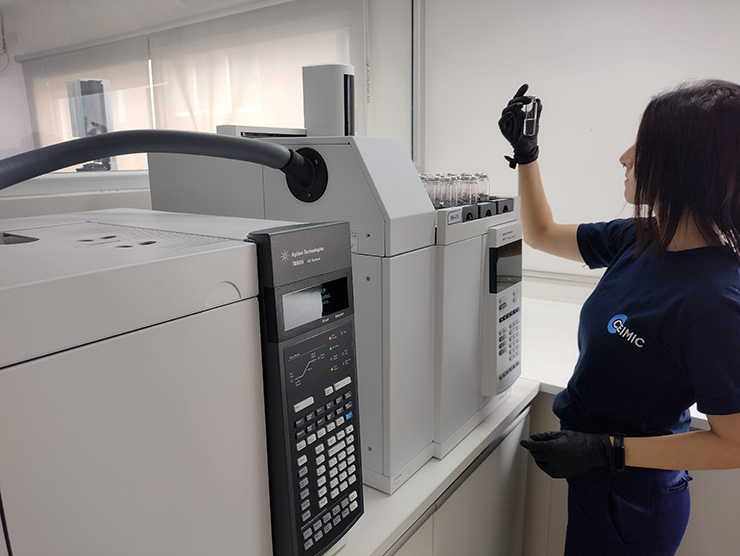
CEIMIC meets the highest quality standards in its food analysis. Our laboratory is accredited under the ISO 17025 standard and authorized by various government agencies, offering a wide range of services that include analysis of pesticides, metals, among others, complying with the highest quality standards in food analysis.

In conclusion, ISO 17025 certification and authorizations from government organizations such as SENASA, INEN, DIGESA, SAG and ICA are essential to guarantee the safety and quality of food. By choosing certified laboratories, companies can ensure that their products meet the highest safety standards, thus protecting the health of consumers and strengthening their position in the global market.

CEIMIC Life Sciences Group
It’s About Life