European Union Multi-Annual Coordinated Control Plan: Guaranteeing Food Safety

European Union Multi-Annual Coordinated Control Plan: Guaranteeing Food Safety

The Multi-Annual National Control Plan: Ensuring Food Safety in the European Union

Exporting food to the European market requires compliance with rigorous standards. Discover how Regulation (EU) 2017/625 and multi-annual controls ensure that products are safe for the final consumer.

About the MANCP

Food safety is the central pillar of the European Union’s health policy. To materialize this commitment, the Multi-Annual National Control Plan (MANCP) stands as the master surveillance tool. Under Article 109 of Regulation (EU) 2017/625, all Member States are obliged to implement control programs that include systematic sampling and exhaustive analysis to verify that every product complies with contaminant and pesticide limits.

Types of Sampling in the Coordinated Control

  • Regular Sampling: Periodic and scheduled monitoring of food products, especially fruits and vegetables, to detect pesticide residues and ensure continuous safety tracking.
  • Risk-Based Sampling: Additional controls activated based on identified risks, allowing for a swift response to potential threats detected in systems like RASFF.
  • Analysis in Accredited Laboratories: All samples are processed under strict quality regulations and advanced methodologies to ensure results with full technical and legal validity.

Food Safety Analysis Pillars:

  • Pesticide Residues: Strict verification of compliance with Maximum Residue Limits (MRLs).
  • Microbiological Analysis: Early detection of pathogens to prevent foodborne illness outbreaks.
  • Chemical Contaminants: Identification of heavy metals, my mycotoxins, and other adverse substances.
  • Food Additives: Validation of safety thresholds for preservatives and colorants.

CEIMIC’s Commitment

At CEIMIC, we actively support these initiatives by providing our technical expertise and high-complexity laboratories so that exporters and producers meet these excellence standards. Our priority is scientific precision at the service of life, ensuring that every analysis contributes to maintaining trust in the global market.

Together, we ensure safe food for the world. For technical inquiries or analysis requests, contact us at: info@ceimic.com

CEIMIC. Life Sciences Testing Group. It’s about life.
The Importance of the Rapid Alert System for Food and Feed (RASFF) in the EU

The Importance of the Rapid Alert System for Food and Feed (RASFF) in the EU

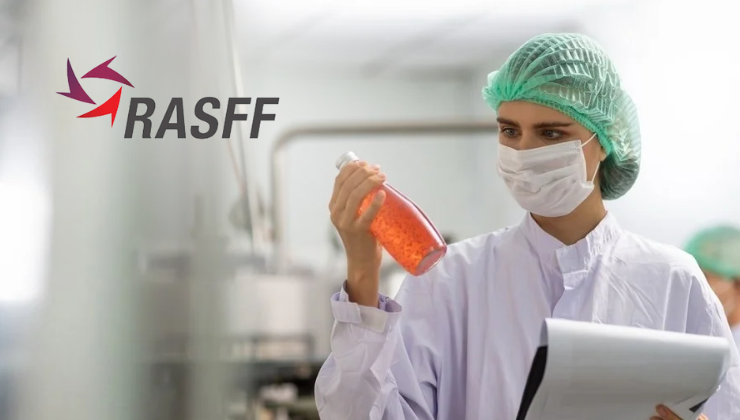
RASFF: The Rapid Alert System Safeguarding Food Safety in the European Union

How do European countries coordinate when a food risk arises? Discover the workings of the RASFF system, the key information exchange tool that guarantees product safety from farm to fork.

In the European Union (EU), food safety is an indisputable priority, and its standards are among the strictest in the world. To ensure product safety, the Rapid Alert System for Food and Feed (RASFF) was established—a crucial platform that enables rapid and efficient information exchange between member countries regarding any detected anomalies.

Legal Basis of RASFF

The RASFF bases its operation on Article 50 of Regulation (EC) No. 178/2002, also known as the General Food Law. This regulation provides the necessary legal framework for control authorities to act in a coordinated manner, allowing for an immediate response to risks that compromise public health derived from food or feed.

Operation and Response Capacity

The primary goal of the system is to detect risks before they become public health crises. Its operational characteristics make it a global reference model:

  • 24/7 Surveillance: The system operates without interruptions, ensuring that urgent notifications are transmitted and responded to collectively and in real-time.

  • Immediate Mitigation Actions: Shared information allows for the activation of surgical product recall protocols, preventing them from reaching the final consumer.

  • Proactive Prevention: By identifying trends and emerging risks, the system protects the integrity of the supply chain, reinforcing confidence in the single market.

Access and Transparency: RASFF Window

Although technical access is limited to competent authorities and the European Commission, the EU promotes transparency through public tools:

  1. RASFF Window: An interactive online database that allows users to consult risk notifications (without revealing sensitive commercial data). It is the main interface for third countries to stay informed about incidents involving products they have exported or received.
  2. Consumer Portal: Provides clear information on food recalls and current health warnings in member countries, ensuring citizens remain informed.

The Role of Preventive Analytics

The RASFF system is a fundamental piece of the EU security gear. Its coordination capacity has proven essential for maintaining international trade stability and the health of millions of people.

At CEIMIC, we understand that the best alert is the one that never happens. Therefore, we support exporters through high-precision analysis that ensures regulatory compliance before the product crosses the border, strengthening your company’s position in the demanding European market.

CEIMIC. Life Sciences Testing Group. It’s about life.

Official Border Controls of the European Union: Everything You Need to Know

Official Border Controls of the European Union: Everything You Need to Know

Exporting to the European Union: Keys to Regulation (EU) 2017/625 and Official Controls

Food safety and quality are essential priorities in the European Union (EU). To guarantee these standards, the EU has implemented Regulation (EU) 2017/625, which introduces stricter and more coordinated procedures for the inspection of food products, including fruits.

Physical and Documentary Inspections

Inspections at EU borders are carried out by the competent authorities of each member state and include:

  • Physical and documentary inspections: Documentation is verified and a visual analysis of the products is performed.
  • Laboratory analysis: Tests are carried out to detect pesticide residues, microbiological contaminants, and other potential risks.

Physical Inspections

Regulation (EU) 2017/625 establishes several mandatory physical inspections:

  • Control of animals and goods: This includes visual and physical inspection of animals and products.
  • Control of packaging and means of transport: The condition and adequacy of the packaging and the vehicles used for transport are verified.
  • Labeling and temperature: Checks are made to ensure labeling is correct and product temperature is appropriate.
  • Sampling for analysis: Samples are taken to perform necessary analyses, tests, or diagnoses.

Documentary Verification

In addition to physical inspections, Regulation (EU) 2017/625 establishes rigorous documentary inspections:

  • Verification of accompanying documents: Certificates, permits, and other documents accompanying the products are checked.
  • Review of records: Records maintained by companies, such as production, transport, and storage, are inspected.
  • Control of import and export documents: Documentation related to the import and export of agri-food products is verified.
  • Management systems audits: Quality and safety management systems implemented by companies are evaluated.

Laboratory Analysis

Laboratory analyses are fundamental for official controls in the agri-food chain:

  • Microbiological analysis: To detect pathogens such as Salmonella, E. coli, and Listeria in food and feed.
  • Chemical analysis: To identify pesticide residues, environmental contaminants, and unauthorized additives. These include:
  • Residue sampling and analysis: Samples of food and feed are taken to analyze the presence of pesticide residues.
  • Maximum Residue Limits (MRLs): Products must not contain pesticide residues exceeding established MRLs.
  • Risk-based controls: Analyses are performed according to a risk-based approach, prioritizing products and substances representing a higher risk to public health.
  • Veterinary residue analysis: To detect residues of veterinary medicines in products of animal origin.
  • DNA analysis: To verify product authenticity and detect genetically modified organisms (GMOs).
  • Plant health testing: To identify pests and diseases in plants and plant products.

At CEIMIC, we have vast experience in pesticide analysis and are recognized for our precision and reliability in residue detection.


We offer a full range of analysis services for agri-exporters wishing to ship their products to the European Union, ensuring they comply with the strict requirements of Regulation (EU) 2017/625.

With our advanced sampling methods and risk-based testing, we help exporters ensure their products do not exceed the established Maximum Residue Limits (MRLs), thus protecting public health and ensuring the acceptance of their products in the demanding European market.


CEIMIC. Life Sciences Testing Group. It’s about life.

Source: https://eur-lex.europa.eu/eli/reg/2017/625/oj/spa