
European Union Multi-Annual Coordinated Control Plan: Guaranteeing Food Safety

European Union Multi-Annual Coordinated Control Plan: Guaranteeing Food Safety

The Multi-Annual National Control Plan: Ensuring Food Safety in the European Union

Exporting food to the European market requires compliance with rigorous standards. Discover how Regulation (EU) 2017/625 and multi-annual controls ensure that products are safe for the final consumer.

About the MANCP

Food safety is the central pillar of the European Union’s health policy. To materialize this commitment, the Multi-Annual National Control Plan (MANCP) stands as the master surveillance tool. Under Article 109 of Regulation (EU) 2017/625, all Member States are obliged to implement control programs that include systematic sampling and exhaustive analysis to verify that every product complies with contaminant and pesticide limits.

Types of Sampling in the Coordinated Control

  • Regular Sampling: Periodic and scheduled monitoring of food products, especially fruits and vegetables, to detect pesticide residues and ensure continuous safety tracking.
  • Risk-Based Sampling: Additional controls activated based on identified risks, allowing for a swift response to potential threats detected in systems like RASFF.
  • Analysis in Accredited Laboratories: All samples are processed under strict quality regulations and advanced methodologies to ensure results with full technical and legal validity.

Food Safety Analysis Pillars:

  • Pesticide Residues: Strict verification of compliance with Maximum Residue Limits (MRLs).
  • Microbiological Analysis: Early detection of pathogens to prevent foodborne illness outbreaks.
  • Chemical Contaminants: Identification of heavy metals, my mycotoxins, and other adverse substances.
  • Food Additives: Validation of safety thresholds for preservatives and colorants.

CEIMIC’s Commitment

At CEIMIC, we actively support these initiatives by providing our technical expertise and high-complexity laboratories so that exporters and producers meet these excellence standards. Our priority is scientific precision at the service of life, ensuring that every analysis contributes to maintaining trust in the global market.

Together, we ensure safe food for the world. For technical inquiries or analysis requests, contact us at: info@ceimic.com

CEIMIC. Life Sciences Testing Group. It’s about life.
Latin American laboratories accredited by the FDA: Pillars of Product Safety and Quality in the US.

Latin American laboratories accredited by the FDA: Pillars of Product Safety and Quality in the US.

CEIMIC and its Commitment to FDA Standards in the Global Market

The U.S. Food and Drug Administration (FDA) recognizes the vital role of accredited laboratories abroad in ensuring the safety and quality of products destined for the U.S. market.

How does the work of FDA-accredited laboratories outside the U.S. affect consumer safety?

Foreign FDA-accredited laboratories play a crucial role by ensuring that imported products meet the same rigorous standards as domestically manufactured ones. They conduct exhaustive testing to detect potential risks and ensure regulatory compliance, significantly reducing the possibility of adulterated products in the market.

How do these laboratories contribute to international trade facilitation?

They provide a reliable infrastructure for evaluation and certification at the point of origin. This streamlines trade by ensuring regulatory compliance from the source, reducing customs inspection times and improving import process efficiency.

What is the role of these laboratories in global supply chain oversight?

They work closely with the FDA to identify public health risks, conducting audits at manufacturing and distribution facilities abroad. This proactive oversight is essential for maintaining the integrity of imported products.

CEIMIC and its laboratories in Latin America hold this accreditation, demonstrating an exceptional commitment to food safety and the promotion of global trade.

CEIMIC. Life Sciences Group. It’s about life.

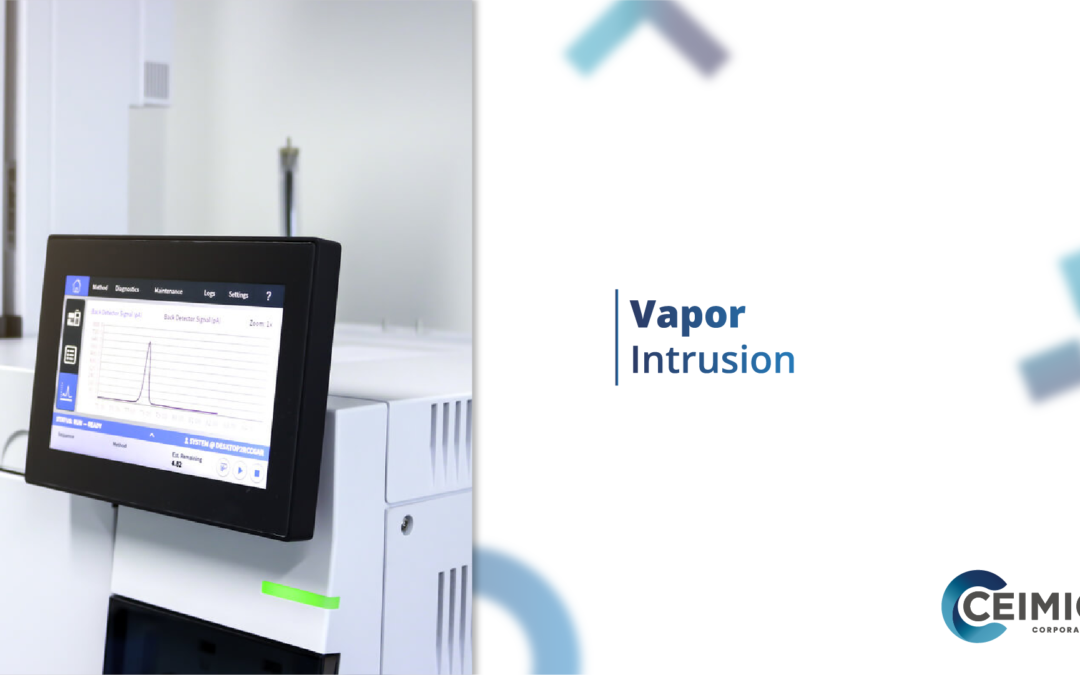
Advanced VOC analysis using the TO-15 method to ensure indoor air quality

Advanced VOC analysis using the TO-15 method to ensure indoor air quality

Vapor Intrusion: Indoor Air Quality Risks and Analytical Solutions

Vapor intrusion occurs when subsurface chemicals migrate into buildings, compromising indoor air quality. Initially identified with radon, this phenomenon now encompasses contaminants such as hydrocarbons and chlorinated solvents from soil and groundwater. Prolonged exposure to these substances can lead to adverse health effects, depending on the concentration and type of compound.

To mitigate these risks, CEIMIC leads the market with the TO-15 method, capable of analyzing more than 90 volatile organic compounds (VOCs).

Unlike common industry standards, we individually certify our Silonite-coated stainless steel canisters rather than batch-testing them. This rigor is crucial: 98% of samples analyzed in Brazil show some level of contamination. Our methodology ensures that any findings originate strictly from the evaluated site and not from the container, providing results of maximum confidence.

ADVANTAGES OF THE TO-15 ANALYSIS PERFORMED BY CEIMIC

  • 9 years of experience in São Paulo, with thousands of analyses performed by the authentic TO-15 methodology.
  • Use of 1.4L canister, able to analyze 5 dilutions without loss of sensitivity.
  • Fomo recognized by ERA as a laboratory of excellence for achieving 100% accuracy in the 2019 interlaboratory test.
  • Our silonite coated stainless steel canisters are individually certified to ensure no contamination.
  • Multiple TO-15 instrumentation systems to ensure on-time results.
  • Inventory of hundreds of stainless steel canisters coated with silonite (to-15 compliant) and vast inventory of Sample Trains and Flow Controllers.
With 9 years of experience and advanced technology, CEIMIC guarantees precision and regulatory compliance in your environmental projects.


CEIMIC. Life Sciences Group. It’s about life.