New requirement for laboratories: accreditation for water quality testing

New requirement for laboratories: accreditation for water quality testing

Impact of Resolution SS No. 195/2024 on Water Quality Control

The São Paulo State Health Department has established new rules for monitoring water for human consumption. With mandatory ISO/IEC 17025 accreditation, analytical safety standards are rising.

About Resolution SS No. 195

Published in August 2024, Resolution SS No. 195 updates the procedures for the control and surveillance of water quality intended for human consumption. The regulations state that all laboratories responsible for testing and sampling must be formally accredited under the ABNT NBR ISO/IEC 17025 standard. The main goal is to ensure highly reliable results to protect public health.

Why is this accreditation critical?

Accreditation is not just an administrative procedure; it is an international demonstration of technical competence. Failures in testing can pose serious health risks. The ISO/IEC 17025 standard regulates everything from sampling to final analysis, ensuring that critical parameters such as turbidity and chlorine are evaluated with validated methodologies.

Essential Parameters for Accreditation

  • Turbidity and Apparent Color.
  • Fluoride and Free Residual Chlorine.
  • Total Coliforms and Escherichia coli.
  • Presence of Cryptosporidium sp. and Giardia sp.
  • Cyanobacteria, Cyanotoxins, and Chlorophyll-a.

Impact on the Laboratory Sector

This requirement drives operational modernization. Laboratories that are not yet accredited will need to invest in technology and quality management systems. Furthermore, the resolution emphasizes responsibility in outsourcing: analytical partners must also possess proper accreditation, reinforcing transparency throughout the supply chain.

Adaptation Period:

The resolution grants a 24-month period starting from August 2024 to:

  • Implement changes in quality management systems.
  • Invest in high-precision analytical technology.
  • Pass accreditation audits before competent bodies such as INMETRO.

How CEIMIC Can Help

At CEIMIC, we already operate under the strict requirements of Resolution SS No. 195. We have consolidated accreditations and a qualified technical team to provide analytical solutions that meet São Paulo’s highest regulatory standards. We support collaborating laboratories and clients on their path to regulatory compliance.

For technical inquiries or analysis services, contact us at: info@ceimic.com

CEIMIC. Life Sciences Testing Group. It’s about life.
Climate change: the importance of monitoring water quality

Climate change: the importance of monitoring water quality

Climate Change: The Critical Importance of Water Quality Monitoring

Access to clean and safe water is vital for life, ecosystems, and sustainable development. Discover how continuous monitoring serves as the most effective tool to protect public health against the challenges of extreme weather.

Drinking water is not just a basic resource; it is the fundamental pillar for human health and the engine of global development. However, water pollution remains one of the most significant challenges of our time, a problem drastically worsened by the effects of climate change. In this scenario, constant monitoring is not an option but an indispensable responsible management tool for environmental balance and sanitary security.

The Impact of Extreme Weather Events

Alterations in climate patterns are alarmingely modifying the availability and purity of water resources:

  • Floods: Sudden increases in water flow carry sludge, sewage, and industrial/agricultural chemical waste (such as pesticides and fertilizers) into water sources, facilitating the spread of dangerous pathogens.
  • Droughts: Reduced water levels diminish the natural dilution capacity of water bodies. This leads to a dangerous concentration of pollutants and heavy metals, sometimes forcing populations to rely on low-quality sources.
  • Storms: Intense rainfall causes accelerated surface runoff, loading rivers, lakes, and reservoirs with sediments and contaminants that alter biological balance and drastically increase turbidity.

Monitoring as a Strategic Tool

Water quality monitoring is a comprehensive scientific process that encompasses systematic collection, laboratory analysis, and precise data interpretation. This data provides the necessary technical basis to identify pollution sources, assess public health risks, ensure compliance with current legal standards, and develop long-term water resource management strategies.

Critical Technical Evaluation Parameters:

  • Physical Parameters: Temperature, color, turbidity, and odor, which serve as immediate sensory indicators of possible alteration.
  • Chemical Parameters: pH, dissolved oxygen, heavy metals (Lead, Mercury, Arsenic), nutrients (Nitrogen and Phosphorus), pesticides, and complex industrial residues.
  • Biological Parameters: Presence of pathogenic microorganisms (bacteria, viruses, and protozoa) according to WHO international guidelines.

Benefits of Continuous Monitoring and CEIMIC’s Role

The importance of effective monitoring has never been more evident. This practice allows for the early identification of contaminants, preventing disease outbreaks and protecting the biodiversity of aquatic ecosystems. CEIMIC offers integrated solutions ranging from accredited sampling to high-precision analysis. Using cutting-edge technologies, we help organizations make informed decisions to minimize impacts on health and the environment.

Together, we can ensure that future generations have access to clean and safe water. For technical inquiries or analysis requests, contact us at: info@ceimic.com

CEIMIC. Life Sciences Testing Group. It’s about life.
Contamination of water and food today: a challenge for public health

Contamination of water and food today: a challenge for public health

Water and Food Contamination During Floods: A Critical Public Health Challenge

Floods do not only cause structural damage; they leave an “invisible threat” in water and basic supplies. Discover the microbiological and chemical risks after the waters recede.

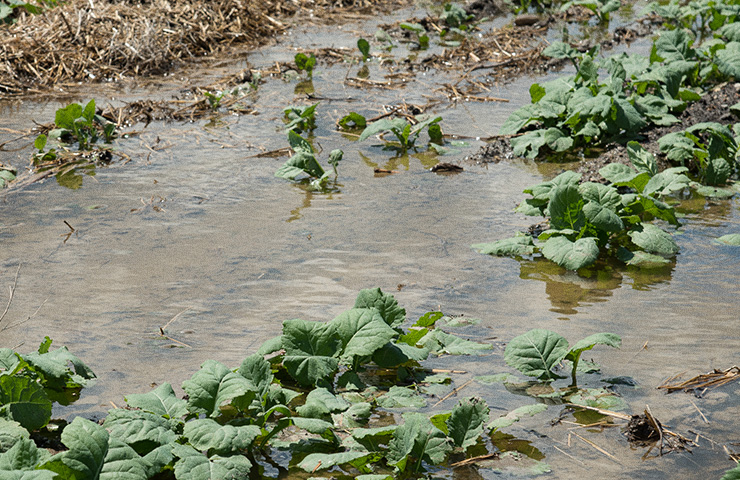
Floods are natural disasters that deeply impact communities. Beyond the immediate destruction, the greatest challenge for public health arises as the waters recede: the massive contamination of water sources and food supplies. This phenomenon, closely monitored by organizations such as the Pan American Health Organization (PAHO), facilitates the proliferation of pathogenic microorganisms and the dispersion of dangerous contaminants.

Where is the danger?

Floodwater acts as a transport vehicle for a wide range of harmful substances, spreading them across residential, agricultural, and industrial areas. According to PAHO, identifying the origin of these contaminants is the first step toward a safe community recovery.

Main Contaminating Agents:

  • Pathogenic Microorganisms: Bacteria such as Escherichia coli, Salmonella, and Vibrio cholerae (the cause of Cholera), as well as viruses like Hepatitis A.
  • Chemical Contaminants: Water runoff releases pesticides and fertilizers that can seep into underground aquifers.
  • Heavy Metals: Mobilization of lead, mercury, and cadmium from industrial zones or waste deposits—substances that can cause permanent neurological damage.

Impact on Health and Vulnerable Groups

Ingesting contaminated water or food after a flood frequently leads to outbreaks of gastroenteritis, leptospirosis, and other waterborne diseases. The World Health Organization (WHO) warns that children, the elderly, and immunocompromised individuals are the most exposed to serious complications.

Prevention and Mitigation Strategies

To minimize the impact, it is essential to implement a response plan based on four pillars recommended by WHO and local authorities:

  1. Basic Sanitation: Strengthen sewage infrastructure and waste disposal.
  2. Source Protection: Sealing wells and using advanced filtration systems to prevent the entry of contaminated surface water.
  3. Community Education: Informing the population about mandatory water disinfection and the disposal of food that has come into contact with floodwater.
  4. Immediate Actions: Rapid response through the distribution of safe water and emergency vaccination campaigns.

The Critical Role of Laboratory Analysis

In disaster scenarios, the visual perception of water is no guarantee of safety. Technical analysis is the only reliable tool to declare an area or supply as “safe.”

At CEIMIC, as leaders in life sciences analysis, we offer comprehensive solutions for crisis management, including urgent microbiological analysis and screening for complex chemical contaminants.

CEIMIC is committed to protecting public health in critical moments. Through detailed analysis and immediate technical response, we ensure that your community or industry regains safety after the emergency.

CEIMIC. Life Sciences Testing Group. It’s about life.
+ For more information on emergency protocols, visit the official website of the World Health Organization (WHO).

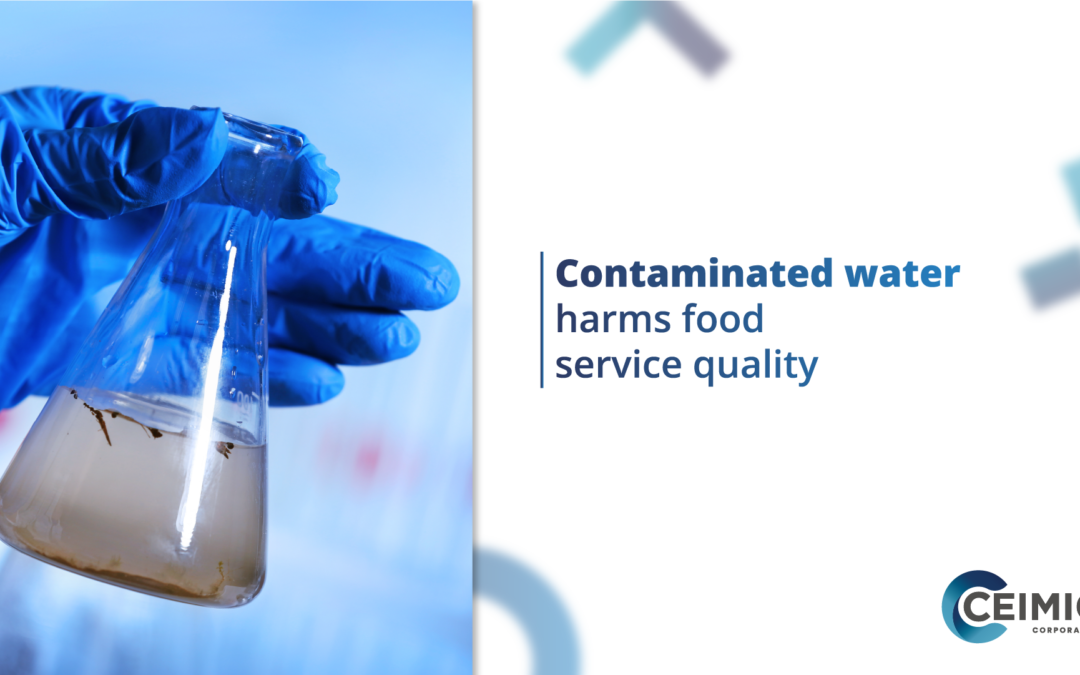
Contaminated water harms food service quality

Contaminated water harms food service quality

Water Quality: The Critical Raw Material in the Food Industry


Prepared food production is inconceivable without the use of water. As a primary raw material, it is essential that water is treated, high-quality, and free of contaminants. Unfortunately, this standard is not always met in the marketplace; even in reputable restaurants, bakeries, or supermarkets, water of doubtful origin or inadequate storage is frequently used.

While industrial processes typically maintain tighter controls, the risk of contamination remains a constant threat. This highlights the importance of continuous analytical testing to guarantee the quality of the main ingredient in products such as beverages, sauces, and processed meats.

Overlooked Risks in Food Preparation Business owners often prioritize the quality of specialty grains, flours, or dairy products, yet frequently overlook the quality and origin of the water used in their compositions.

“Water can contaminate food in many ways,” says Rogério Andrade, Business Director at CEIMIC Laboratories Group. “From basic hygiene to the preparation phase, food can be compromised by chemical elements, toxins, or microorganisms. These can cause foodborne illnesses, deteriorate prepared meals, and undoubtedly alter the flavor profile of the products.”

According to Andrade, it is vital that water used in food handling and preparation strictly adheres to the physicochemical and microbiological standards established by current regulations.

CEIMIC. Life Sciences Group. It’s about life.