CEIMIC Signs Technical-Commercial Agreement with GRUPO MARWEN CALSAN S.L to Promote Energy Efficiency in Latin America

CEIMIC Signs Technical-Commercial Agreement with GRUPO MARWEN CALSAN S.L to Promote Energy Efficiency in Latin America

CEIMIC and Marwen Calsan Group Sign Agreement to Lead the Energy Transition


In May 2024, CEIMIC Life Sciences Testing Group signed an important technical-commercial agreement with GRUPO MARWEN CALSAN S.L (Marwen Engineering) in the city of Jaén, Andalusia, Spain. This agreement focuses on the development and implementation of services related to energy efficiency in the Latin American region.


GRUPO MARWEN CALSAN S.L, chaired by Dr. Javier Martínez Calahorro, is a Spanish company with extensive experience in consulting specialized in the energy and technology sectors. With over 15 years of experience, they have carried out projects in Europe, Latin America, and Africa.

The agreement includes a variety of essential services for energy efficiency:

  • Energy audits: Detailed assessment of energy consumption to identify savings opportunities.
  • Implementation of ISO 50001 management systems: Implementation of energy management systems that comply with international standards.
  • Photovoltaic solar energy studies: Assessments for the installation and optimization of solar systems.
  • LED lighting replacement studies: Analysis and proposals for conversion to more efficient LED lighting.
  • Carbon footprint calculations: Measurement and strategies to reduce the carbon footprint.
  • Sustainability reports (CSR): Documentation and analysis of sustainable practices.
  • Design of sustainability strategies: Development of plans to improve long-term sustainability.
  • Development of training activities: In-person and videoconference courses for training on energy efficiency topics.
  • Carbon footprint verification: Validation of carbon footprint calculations.
  • Energy savings verification: Confirmation of the achieved energy savings.

This agreement is especially beneficial for our clients in the mining, hydrocarbon, and industrial sectors, who are increasingly required to comply with new governmental regulations and the growing demands of credit institutions.

At CEIMIC, one of our main objectives is to support our corporate clients in all the countries where they operate, offering the widest range of analytical services and related studies. Since the beginning of 2024, we have activated an ambitious plan for the development and accreditation of new services, which include:

  • Analysis and evaluation of fugitive emissions: Use of advanced OGI technology and quantification software to assess methane and VOC emissions.
  • Odor analysis: Detailed studies of odor emissions and mathematical modeling of odor dispersion.
  • Accredited hydrobiology studies: Toxicity analysis in fish and birds, and environmental studies in blood and tissues.
  • Development of pilot studies: Evaluation of remediation methodologies for soil and water contaminants.

This agreement with a company of the quality of GRUPO MARWEN CALSAN S.L is a significant step towards fulfilling our commitment to offering innovative and sustainable solutions to our clients.

CEIMIC Life Sciences Testing Group: Innovating for a more efficient and sustainable future.

It’s about life.
Latin American laboratories accredited by the FDA: Pillars of Product Safety and Quality in the US.

Latin American laboratories accredited by the FDA: Pillars of Product Safety and Quality in the US.

CEIMIC and its Commitment to FDA Standards in the Global Market

The U.S. Food and Drug Administration (FDA) recognizes the vital role of accredited laboratories abroad in ensuring the safety and quality of products destined for the U.S. market.

How does the work of FDA-accredited laboratories outside the U.S. affect consumer safety?

Foreign FDA-accredited laboratories play a crucial role by ensuring that imported products meet the same rigorous standards as domestically manufactured ones. They conduct exhaustive testing to detect potential risks and ensure regulatory compliance, significantly reducing the possibility of adulterated products in the market.

How do these laboratories contribute to international trade facilitation?

They provide a reliable infrastructure for evaluation and certification at the point of origin. This streamlines trade by ensuring regulatory compliance from the source, reducing customs inspection times and improving import process efficiency.

What is the role of these laboratories in global supply chain oversight?

They work closely with the FDA to identify public health risks, conducting audits at manufacturing and distribution facilities abroad. This proactive oversight is essential for maintaining the integrity of imported products.

CEIMIC and its laboratories in Latin America hold this accreditation, demonstrating an exceptional commitment to food safety and the promotion of global trade.

CEIMIC. Life Sciences Group. It’s about life.

Metal analysis in wine using ICP-MS: ensuring quality and safety for global exports

Metal analysis in wine using ICP-MS: ensuring quality and safety for global exports

Metal Determination in the Wine Industry: OIV and ISO 17025 Standards


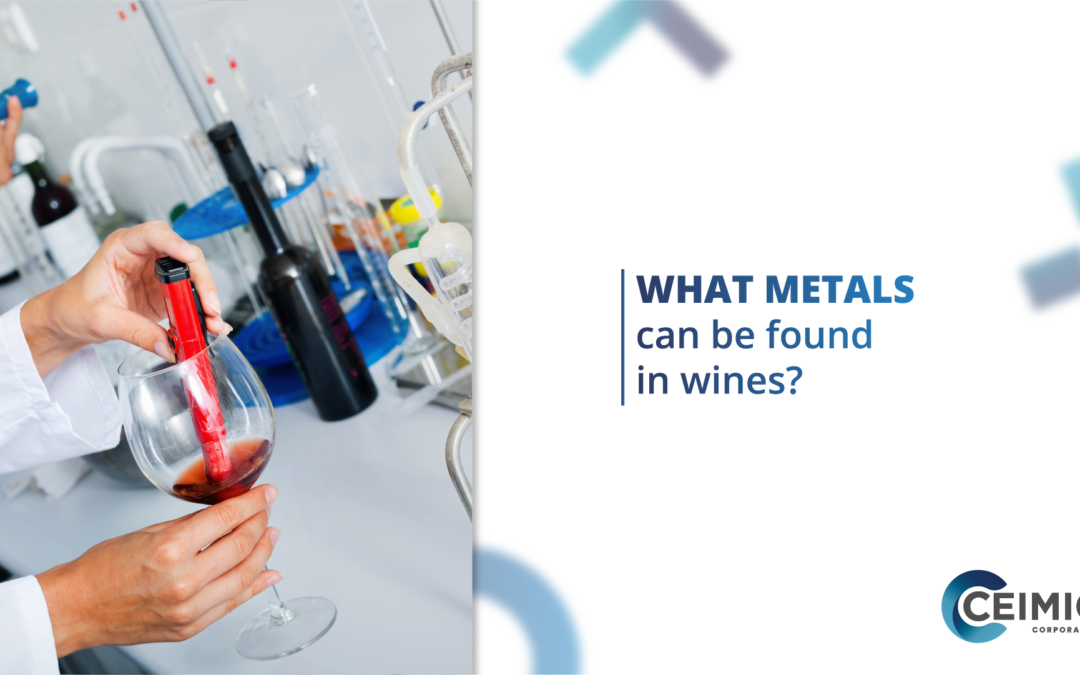
The presence of metals in wine can originate from both the fruit’s biological process and contact with industrial machinery during winemaking. Elements such as aluminum, copper, manganese, nickel, zinc, and lead exhibit varying levels of solubility and potential impact on the final product. In Argentina, the world’s tenth-largest wine exporter, academic studies have identified significant concentrations of manganese, lead, molybdenum, and cobalt that require rigorous monitoring.

To ensure safety and compliance with international regulations, the TASQA-CEIMIC Argentina laboratory performs specialized testing using Inductively Coupled Plasma Mass Spectrometry (ICP-MS). This methodology allows for the quantification of trace metals with high precision, ensuring the product meets the requirements of the most demanding global markets. Our processes are endorsed by the International Organisation of Vine and Wine (OIV, Method OIV-MA-AS323-07) and hold ISO 17025 accreditation from A2LA.

At CEIMIC, we support the excellence of the Argentine wine industry. Contact us at info@ceimic.com

Odor pollution in the air of large cities

Odor pollution in the air of large cities

Impact of Odorous Emissions on Health and the Environment


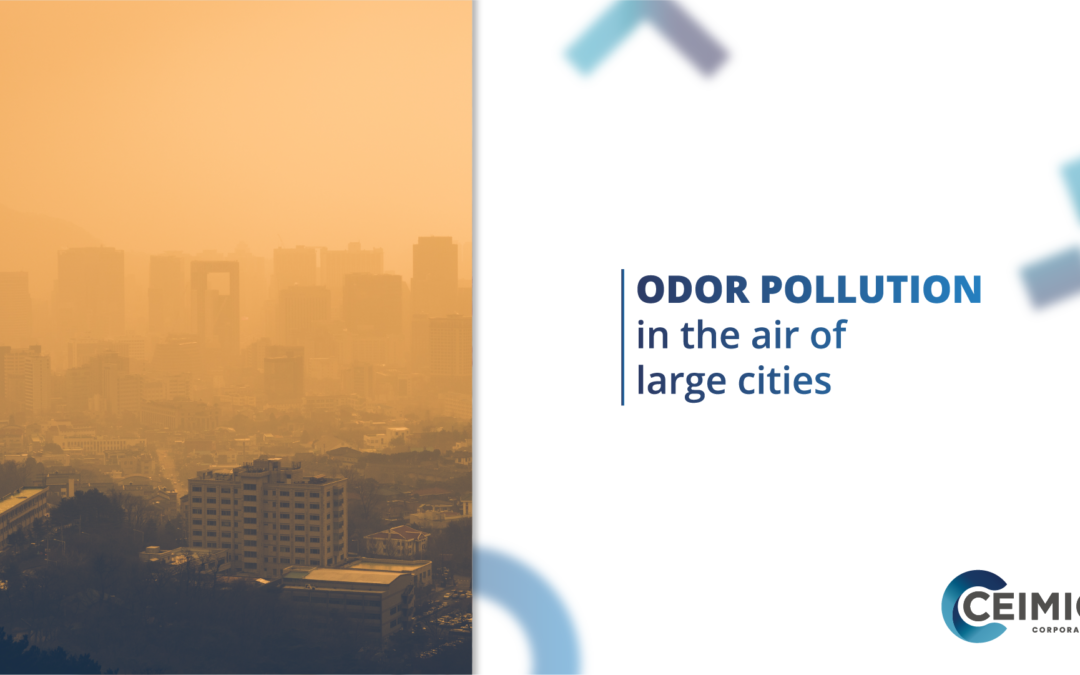
Industrial and urban activities generate various types of atmospheric pollution, including the release of odorous molecules that compromise air quality. This phenomenon is particularly critical in large urban centers with high industrial density, wastewater systems, or solid waste accumulation. Beyond the aesthetic impact or discomfort, the presence of these compounds can exacerbate respiratory conditions such as asthma, pneumonia, and bronchitis in vulnerable populations.

It is the responsibility of companies and environmental authorities to mitigate these emissions by accurately identifying their sources. To address this challenge, the ES4I Peru laboratory, part of the international CEIMIC group and accredited under the NTP-ISO/IEC 17025 standard, offers comprehensive environmental odor studies. We have extensive certified experience in characterizing and monitoring odorous emissions, ensuring compliance with environmental quality standards.

At CEIMIC, we help your organization meet air quality regulations. Contact us at info@ceimic.com

Glyphosate analysis in coffee: meeting international standards for export

Glyphosate analysis in coffee: meeting international standards for export

Glyphosate Determination: Food Safety and Market Requirements


Glyphosate is a widely debated herbicide due to its classification by international bodies, such as the World Health Organization (WHO), which has categorized it as “probably carcinogenic.”

Various environmental organizations have also pointed to potential links with chronic, neurological, and reproductive health issues. While conclusive studies have primarily focused on animal and cellular models, the global trend in food safety increasingly leans toward the precautionary principle.

In this context, maintaining glyphosate residue levels at a minimum is not only a preventive health measure but also an essential requirement for accessing the most demanding international markets. At CEIMIC, we understand the challenges facing the coffee industry and offer high-precision analytical services for detecting this molecule. Our new laboratory in Colombia (Chía, Cundinamarca) is equipped with the technology necessary to ensure your exports comply with permitted limits and current regulations.

At CEIMIC, we protect your brand’s reputation. Contact us at +57 3103987862 for specialized analysis.